Discovering Merlin
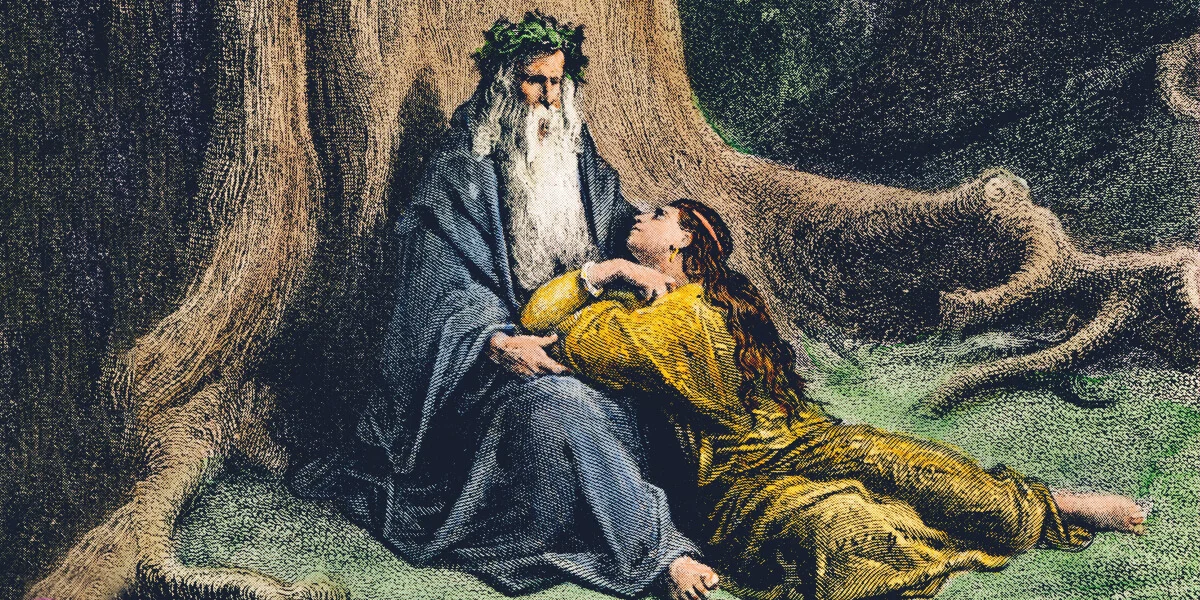
On myth, memory, and the ways we construct meaning from fragments of the past.
Merlin exists in the space between history and myth, between what we know and what we imagine. To discover Merlin is not to find a person, but to encounter a pattern—a way of thinking about knowledge, power, and the relationship between the human and the natural world.
The Pattern of the Sage
The figure of Merlin appears across cultures and centuries, always as the wise counselor, the one who sees beyond the immediate, who understands the deeper currents of history and nature. But what does it mean to discover such a figure? What does it mean to recognize the pattern?
I think it means recognizing that wisdom is not about having all the answers, but about asking the right questions. It’s about seeing connections where others see only fragments, about understanding that the past and future are not separate, but part of a continuous flow.
Memory and Myth
The stories we tell about the past are always part memory, part myth. The distinction between the two is less clear than we might think. Memory itself is a form of myth-making—we reconstruct events, fill in gaps, create narratives that make sense of our experience.
Merlin exists in that space. He is both historical figure and archetypal pattern, both real person and symbolic representation. To discover him is to recognize that we, too, exist in that space—part fact, part fiction, part memory, part myth.
The Natural World
Merlin’s connection to the natural world is central to his character. He speaks the language of birds, understands the movement of stars, knows the secrets of plants and stones. This is not mere fantasy, but a recognition that human knowledge is incomplete without understanding our place in the larger web of life.
Standing at Doe Castle, looking out over the water and the surrounding landscape, I feel that connection. The stone of the castle, the water of the lake, the trees and hills—all of it speaks a language older than words, a language that Merlin would have understood.
The Discovery
To discover Merlin is not to find a person from the past, but to recognize a pattern in the present. It’s to see that wisdom comes from paying attention—to the natural world, to history, to the stories we tell ourselves and each other.
The discovery is ongoing. Each time we look, we see something new. Each time we listen, we hear a different voice. Merlin is not a destination, but a way of seeing, a way of understanding our place in the larger story.
And in that understanding, we find not answers, but better questions. We find not certainty, but a deeper engagement with the mystery of existence itself.