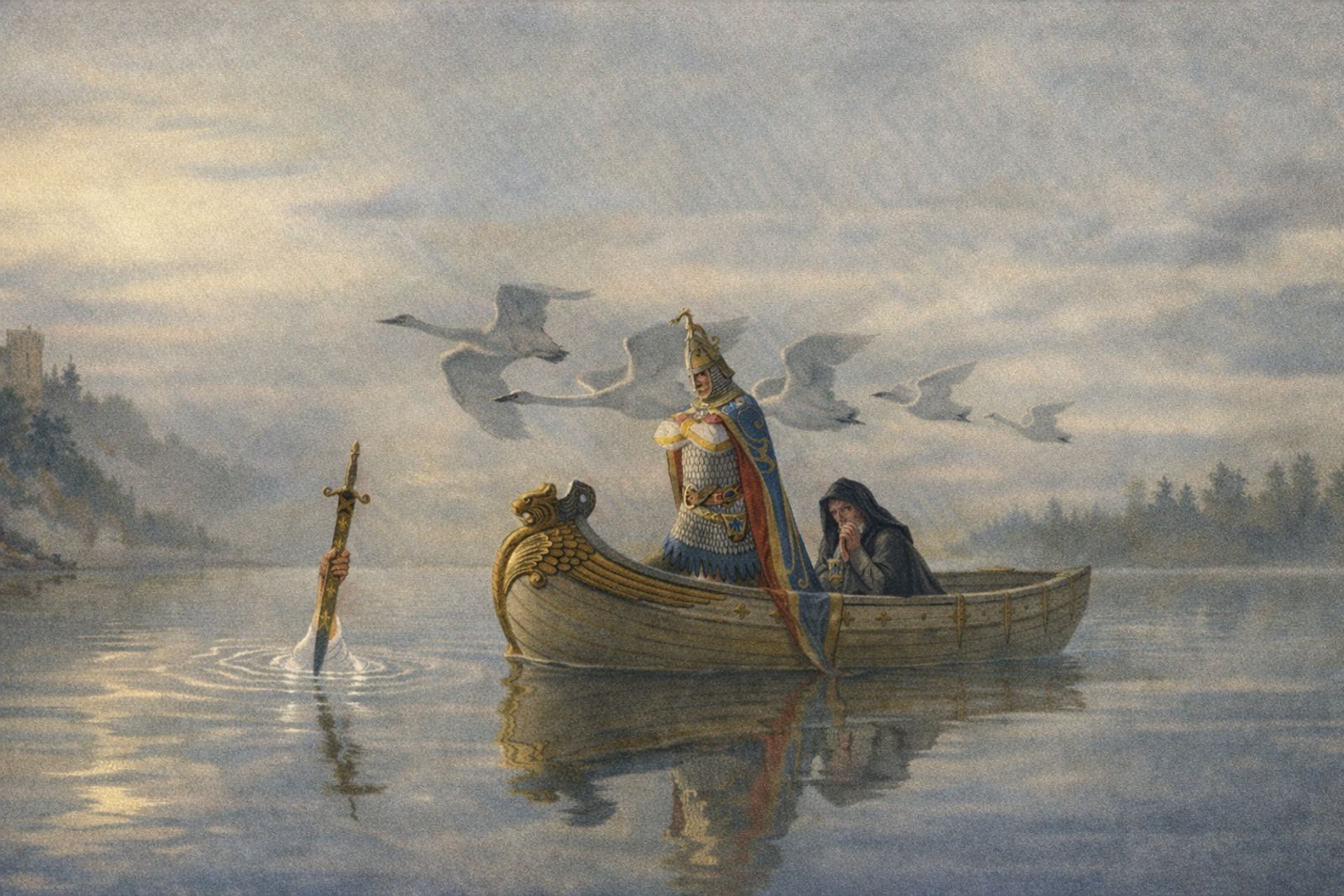
Arthur and Merlin — illustration

Take Flight

An open monastery, in three movements — the Rule that orders the day, the Scriptorium where attention becomes work, and the Recall that calls the wanderer home.

“However much of Ireland you may travel each day, you will come to me each evening so that I may write your history.”

— Moling to Suibhne, Buile Suibhne §76 (O’Keeffe, 1913)

At the end of Buile Suibhne, the wild king comes to Teach Moling. The saint does not cure him, cage him, or require him to live within the walls. He gives the wanderer a pattern: range where you will by day; return at vespers; let the story be written; receive the meal kept for you. For a year Suibhne keeps that rule without surrendering his freedom.

This page takes the shape of that welcome. The monastery stands open, but there is more than one way to draw near: keep the Rule that returns the day to prayer; stay in the Scriptorium to watch and work; or, if you cannot stay, take flight and answer the Recall when another leaf is ready.

The keystone essay

Return of the Scriptorium

The scriptorium was never merely a room. It was a rule of attention in which reading, writing, prayer, and preservation became one labor — and its most complete form is a saint at Teach Moling, feeding a madman with one hand and writing him down with the other.

Read Return of the Scriptorium →
craft medieval scriptorium attention

I · Return to prayer

The Rule

A monastic rule is not merely a fence around conduct. It gives the day a form: hours of prayer, reading, labour, rest, and return. Prayer is its spine, not one activity among many; the other hours gather around it and are changed by it.

Moling’s rule for Suibhne is unusually merciful: the day remains wild, but vespers becomes its fixed point. Range, return, record, and meal make a small liturgy of hospitality. The wilderness is not abolished; it is given an hour at which it can come home.

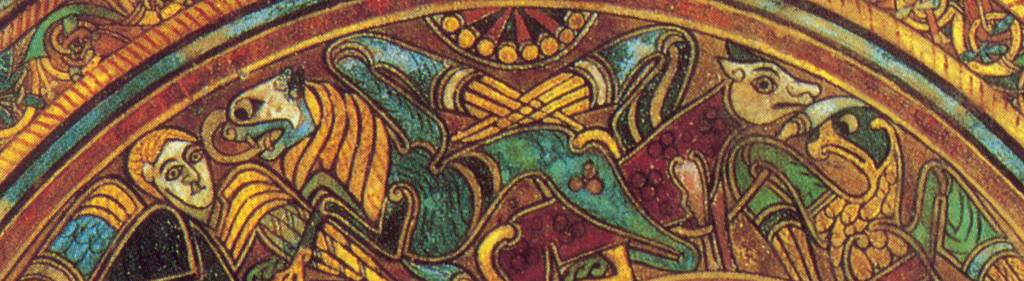
A detail from the Book of Kells: interlaced beasts and figures beneath a decorated arch

The first movement

The Rule

Moling’s binding at Teach Moling, read as a rule in four parts: the range, the return, the record, and the meal. Begin with the fixed return — a modest practice of prayer and attention that can give the rest of the day its shape.

Keep the rule

II · Watch and work

The Scriptorium

The scriptorium is the Rule under the hand. Where the work was divided, it was divided into offices that each guard a different way for a book to fail: the armarius who issued the materials and kept the shelf, the scribe who copied, the rubricator and the illuminator who filled the spaces he left, the corrector who read the finished copy back against its exemplar, and the binder who made loose gatherings into one body. That is what attention looks like when it is institutional rather than felt.

It was legislated as such. At the Stoudios monastery in Constantinople, Theodore the Studite set penances for scribal negligence — fifty genuflexions for making more glue than was needed and letting it spoil. The Rule of Saint Ferréol, around 560, put the other half of it plainly: he who does not turn the earth with a plough ought to write the parchment with his fingers. Writing was not an alternative to labour. It was the labour, and it was costed accordingly — the tenth-century scribe Florentius of Valeránica wrote that the work mists the eyes, curves the back, and fills the kidneys with pain, and asked the reader to turn the pages slowly in return.

Nor was that labour separate from prayer. Gospel books such as the Book of Kells served the liturgy; psalters served communal worship and private devotion. The hand prepared the words the community would later proclaim, sing, and pray. Here, the Scriptorium names that same union of inward attention and durable work — a practice that can be resumed at any faithful desk, including yours.

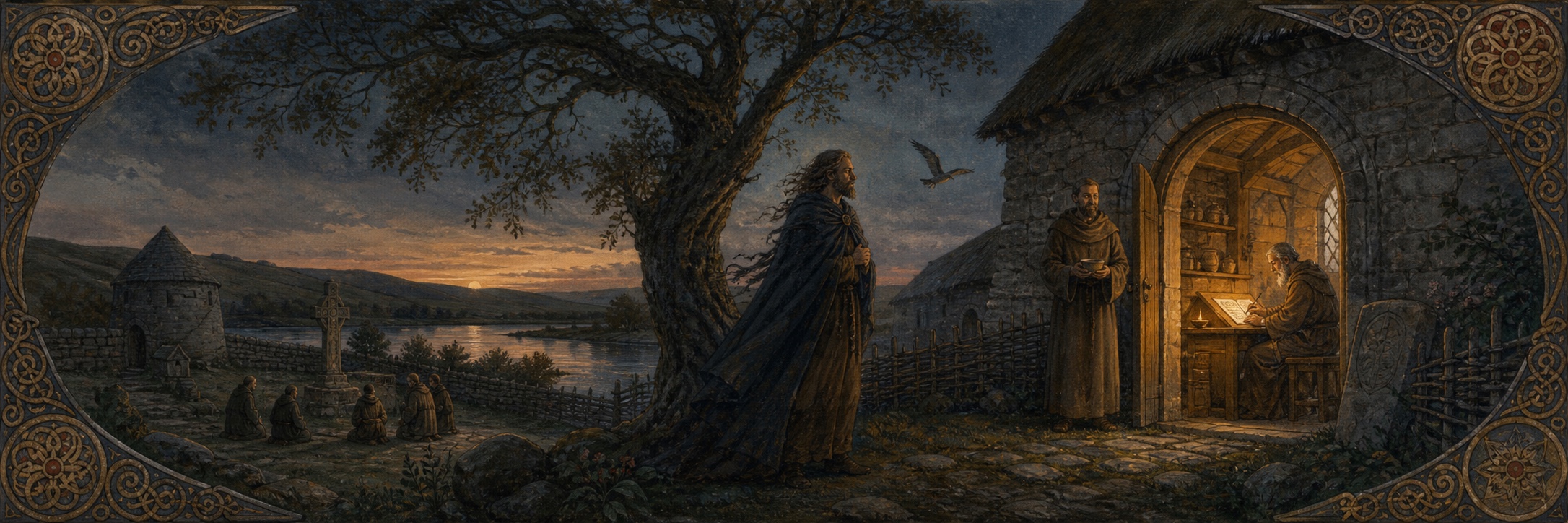
An illuminated scene at Teach Moling: Sweeney free beneath a tree, the monastery open at dusk, and a scribe working by lamplight

The library

The Scriptorium

Reading, writing, and prayer held inside one vocation. The Word-Hoard preserves the languages; four wings gather the matters; essays and studies are the leaves being prepared. Enter to read, or remain long enough to make something of your own.

Enter the Scriptorium

The four wings

Before the matters: the Word-Hoard — the linguistic foundation; philology, tongues, and the makers who read in the original.

Its first study is Tolkien, the Philologist → — the comparative philologist who made the medieval tongues audible again for a modern public: the discipline, the Arthurian refusal, the Celtic contact, and the languages that came first.
III · Flight and return

The Recall

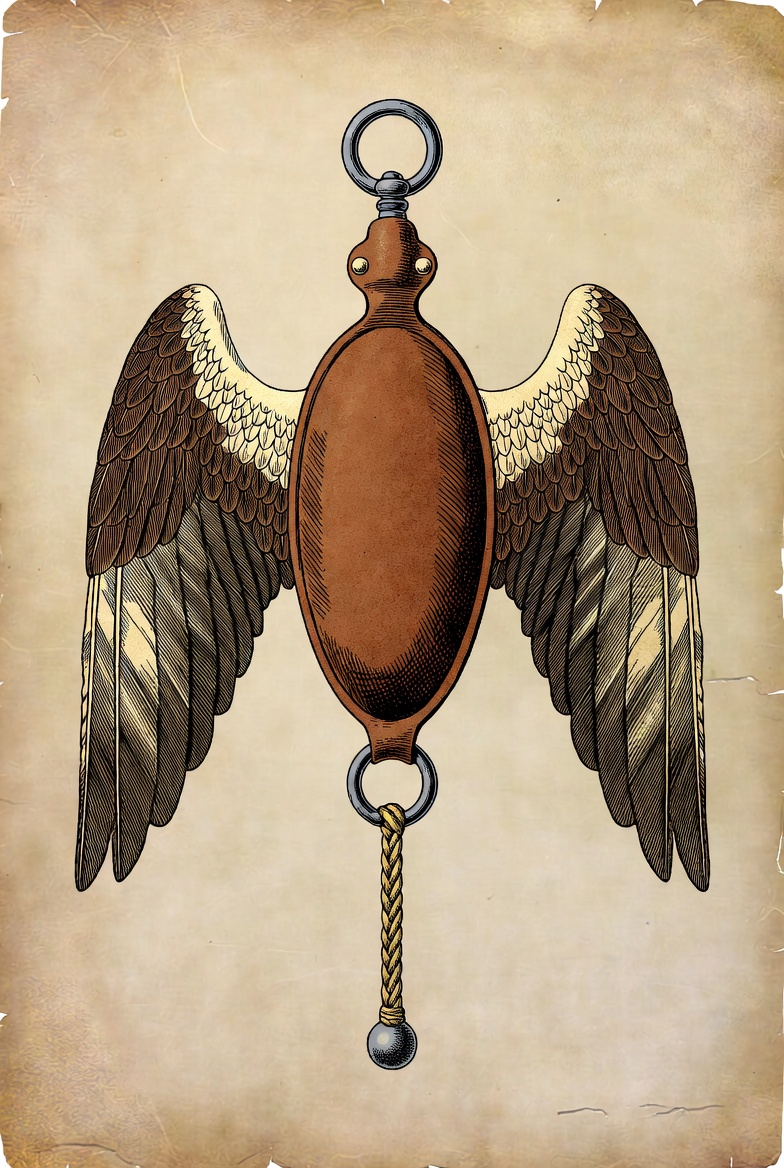
Moling does not close the monastery gate behind Suibhne. He lets him range and asks him to return. The falconer’s lure is our metaphor for that open-handed call: not a leash, not a trap, but a visible promise that there is a place to come back to.

Not everyone can keep a rule or remain for the long work of the Scriptorium. Take flight. When a new essay, novel excerpt, or dispatch is ready, the Recall will bring word. Return then, read the new leaf, and range again.

The site is the manuscript of record. Substack carries the recall.

A falconer's lure — the swung weight that calls the hawk back to the hand

An identity essay

VI · Ascent

Seraphim's Wings

Finding a man who had taken his life in the woods; conversion to Orthodoxy; taking St Seraphim as patron; the flight of the soul and a red-tailed hawk — the other diptych meaning of Sweeney in Flight.

Read Seraphim's Wings → In progress
creative-nonfiction identity seraphim orthodoxy

References

What the rule above is drawn from, and where the reading is this site's rather than the source's.

  1. J. G. O'Keeffe, ed. and trans., Buile Suibhne (Irish Texts Society, 1913), §§ 76–77 — the binding at Teach Moling: the range, the return at vespers, the writing of the history, and the collation kept back. The rule this station is named for is given inside the tale. Read out in full on The Rule.
  2. Benedict of Nursia, Regula Benedicti (c. 530), esp. chh. 8–20, 48 — the horarium: fixed hours of prayer, appointed reading, and the labour of the hands as one architecture. Linked in the Doyle translation. Corroboration rather than source: a seventh-century Irish house was not simply keeping Benedict’s rule; it is cited here for the comparable joining of prayer, reading, and labour in one day.
  3. The Library of Trinity College Dublin, “The Book of Kells” — a Gospel book made in the Columban monastic family and probably intended for ceremonial use on special liturgical occasions.
  4. The Metropolitan Museum of Art, “Illuminated Psalter” — on psalters as widely copied books used for daily devotion, prayer, literacy, and liturgical worship.
  5. J. Leroy, “A Note on Penances Prescribed for Negligent Scribes and Librarians in the Monastery of Studios,” Scriptorium 36:2 (1982) — Theodore the Studite’s Epitimia.
  6. Sarah J. Biggs, “The Burden of Writing: Scribes in Medieval Manuscripts,” British Library — the colophon of Florentius of Valeránica, and the Rule of Saint Ferréol on the plough and the pen. Florentius is quoted in paraphrase here and in full on the Scriptorium page. The division of scribal offices, and the rest of the history this movement leans on, is set out there with its apparatus.
  7. The falconry vocabulary used here — lure, stoop, recall — follows ordinary usage in the sport: the lure is the swung weight by which a falconer calls a bird back to the hand. The lure is this site’s metaphor for Moling’s open-handed call. It is not an object or image found in Buile Suibhne.