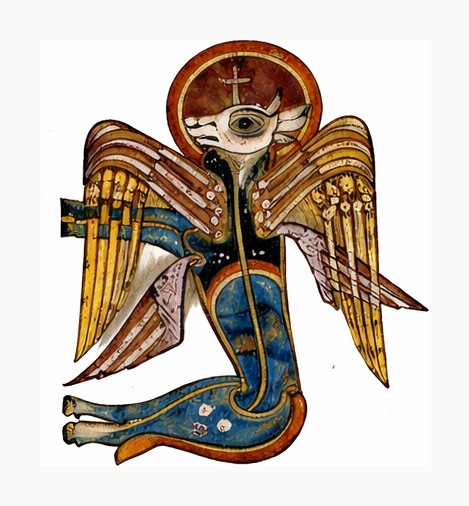
The Western wing is the great labor of ordering. Where the East developed metaphysical
precision, the Latin West built institutions: the legal vocabulary of grace and free will, the
monastic Rule that scheduled prayer by the hour, the cathedral school, the scholastic
distinction. Augustine on grace, Benedict on order, Gregory the Great on pastoral care — the
long arc from late antiquity through the Carolingian schools to the high scholastic synthesis.
The Latin Fathers worked under the pressure of administering a Church that increasingly
inherited the imperial weight Rome was shedding. Their writings are pastoral, juridical,
exegetical, polemical — Tertullian inventing Latin theological vocabulary, Ambrose
Christianizing Cicero, Augustine arguing through the catastrophe of the Vandal siege, Jerome
translating the Vulgate, Gregory the Great writing the Liber Pastoralis Curae for the
bishops who would carry the Church through the dark sixth century.
The figures below are read in that pressurized register. The proper Latin term for what they
are doing is labor — patient ordered work, the chronicle and the gloss, the Rule and
the school, the long building project that, by the twelfth century, would produce the
cathedrals and Aquinas's Summa. They are the patient masons of the Latin world.