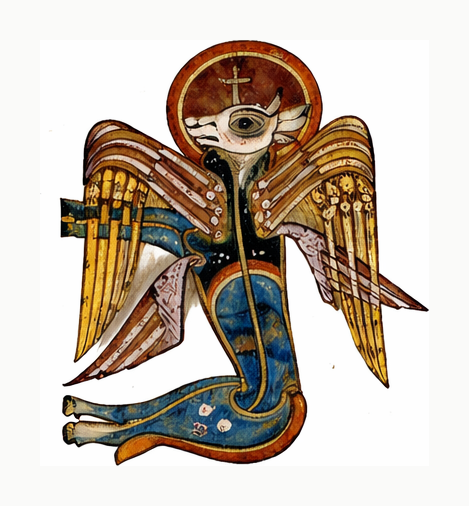
The Calf of Luke — Western wing

Luke · Calf · Ordered labor

The Western Wing

TOLLE · LEGE

The Western wing is the great labor of ordering. Where the East developed metaphysical precision, the Latin West built institutions: the legal vocabulary of grace and free will, the monastic Rule that scheduled prayer by the hour, the cathedral school, the scholastic distinction. Augustine on grace, Benedict on order, Gregory the Great on pastoral care — the long arc from late antiquity through the Carolingian schools to the high scholastic synthesis.

The Latin Fathers worked under the pressure of administering a Church that increasingly inherited the imperial weight Rome was shedding. Their writings are pastoral, juridical, exegetical, polemical — Tertullian inventing Latin theological vocabulary, Ambrose Christianizing Cicero, Augustine arguing through the catastrophe of the Vandal siege, Jerome translating the Vulgate, Gregory the Great writing the Liber Pastoralis Curae for the bishops who would carry the Church through the dark sixth century.

The figures below are read in that pressurized register. The proper Latin term for what they are doing is labor — patient ordered work, the chronicle and the gloss, the Rule and the school, the long building project that, by the twelfth century, would produce the cathedrals and Aquinas's Summa. They are the patient masons of the Latin world.
On the Shelf

10 introductions

The introductions. One public home per figure: who they are, why they belong here, and a door into study when that study is written.

Tertullian

c. 155 – c. 240

Carthaginian apologist · Inventor of Latin theology

The North African lawyer who first wrote serious Christian theology in Latin. Coined Trinitas, persona, substantia — the technical vocabulary the West would inherit for a millennium. Ended a Montanist, but the words stayed.

Introduction not yet written

Cyprian of Carthage

c. 200 – 258

Bishop · Martyr

Tertullian's pupil, then bishop in his own city. De Unitate Ecclesiae sets the Latin doctrine of the visible Church and the office of bishop. Beheaded in the Valerian persecution.

Introduction not yet written

Ambrose of Milan

c. 340 – 397

Bishop of Milan · Mentor of Augustine

Trained as a Roman lawyer; consecrated bishop while still an unbaptized catechumen. Stood down emperors, baptized Augustine at the Easter Vigil of 387, Christianized Cicero in De Officiis, and shaped Western liturgy through his hymns.

Introduction not yet written

Jerome

c. 347 – 420

Translator of the Vulgate · Polemicist

The greatest Christian Latinist of late antiquity. Settled at Bethlehem and translated the Hebrew Bible into Latin from the original, against the protests of his contemporaries. The Vulgate is his.

Introduction not yet written

Augustine of Hippo

354 – 430

Bishop · Theologian · Doctor of Grace

The dominant intellect of the Latin West. The Confessions invent Christian autobiography; the City of God writes Christian history; the anti-Pelagian works settle the Latin doctrine of grace. Dies as the Vandals besiege Hippo.

Introduction not yet written

Leo the Great

c. 400 – 461

Pope · Defender of Chalcedon

The Tome of Leo to Flavian, read at Chalcedon in 451, settles the language of the two natures: "Peter has spoken through Leo." Met Attila outside Rome in 452 and is said to have turned him back.

Introduction not yet written

Benedict of Nursia

c. 480 – 547

Father of Western monasticism · The Rule

Founded Monte Cassino c. 529. The Regula Benedicti — a moderate, pastoral synthesis of Pachomius, Basil, Cassian, and the Master — becomes the constitution of Western monasticism for fifteen centuries.

Introduction not yet written

Gregory the Great

c. 540 – 604

Pope · Pastoral theologian

The Roman prefect who became a Benedictine monk and then pope amid the wreckage of the Lombard wars. The Liber Pastoralis Curae is the medieval bishop's manual; sent Augustine of Canterbury to the English in 597.

Introduction not yet written

Bede

c. 673 – 735

Monk of Jarrow · Historian

The greatest Latin scholar of the Anglo-Saxon period. The Historia Ecclesiastica Gentis Anglorum is the founding work of English history; his commentaries on Scripture, computus on the calendar, and lives of the saints shape Carolingian scholarship.

Introduction not yet written

Alcuin of York

c. 735 – 804

Scholar · Architect of the Carolingian schools

Charlemagne's chief educational adviser. Reformed Latin script (the Carolingian minuscule that this site's body type descends from) and built the cathedral and monastic schools that would carry classical learning through the early medieval centuries.

Introduction not yet written

Reflections

The heart with a named introduction — thoughtfulness that also turns toward the self. More than one reflection may hang from the same figure.

The Patient Masonry of the Latin West

On the Latin temperament — its juridical instinct, its love of order, its reliance on the gloss and the chronicle. How Augustine's interiority became the law school, the Rule, and finally the cathedral.

Reflection not yet written

How this wing grows

Introduction first — the shelf entry and its public home. Study when a governing question is earned: life and work, overview, reading list, and how to read, with claim-notes where the facts need them. Reflection afterward — one or many — taking it to heart rather than replacing the introduction.

The Latin Rule and the hours belong here as practice, not as a museum of Fathers: each introduction should leave a reader able to begin, not only able to name.